
The housing sector: caught between investment pressure and operational reliability
In many multi-occupancy buildings – particularly within existing housing stock - building services largely operate out of sight. In some cases, there’s a substantial need for refurbishment, but this collides with limited system upgrade budgets. Meanwhile, conventional building management systems often exceed the available budget and are therefore not installed.
As a result, faults often only become apparent when they are reported by tenants and can only be remedied reactively, which results in delays and – sometimes – comes at greater expense.
Pumps can sometimes be set up to run purely on factory settings, without being adapted to the actual demand of a building. Building management systems are not always in place; and therefore, systematic monitoring and early warning systems are lacking.
In addition, regulatory requirements for transparency and efficiency are increasing. At European and national level, the following regulations provide the framework:
- EPBD (EU Buildings Directive): regulates the overall energy efficiency of buildings.
- EED (EU Energy Efficiency Directive): promotes measures to increase energy efficiency, including in the building sector.
As a result, energy management is becoming a focus even where no building management system has previously been in place.
These requirements do not solely affect existing buildings.
In new-build projects, transparent, demand-based operation is expected right from the start. Regardless of the building status, anyone wishing to operate residential properties safely, economically and in a future-proof manner needs reliable data and solutions that can be flexibly integrated into different building concepts.
Identify problems before they arise – smart solutions as an early warning system
Reliable operation is fundamental for satisfied tenants. This is precisely where our solutions come in: they create transparency regarding the technical condition of central pumping systems and help to identify defects at an early stage – before malfunctions, failures or loss of comfort occur.

Our digital solutions open up new possibilities for monitoring and control. Smart pumps can be integrated into existing building management systems or networked via standardised interfaces.
The Wilo-Monitor provides the necessary transparency – either as an addition to an existing building management system or as a standalone solution. It makes energy flows visible, enables remote monitoring and reports faults at an early stage.
This creates a smart early warning system for the technical operation of multi-residential buildings and residential complexes.
Contact us now and increase operational reliability
Start with a no-obligation consultation and find out how you can reliably safeguard the technical operation of your residential properties.
Reduce operating costs in existing buildings through demand-based system settings
This is where the Wilo Energy Audit* provides additional sound decision-making support: it shows where pumps are oversized, inefficient, incorrectly set or technologically outdated, and how we can support you in optimising your pumps and pump systems.
Building on this, our pumps and pump systems ensure economical operation in all central areas of multi‑residential buildings and residential complexes. They cover everything from heating and domestic hot water supply to pressure boosting and drainage.Each system is designed to operate according to demand and can be precisely adjusted to the actual duty point. In this way, unnecessarily high operating conditions can be avoided and costs reduced.
*The Wilo-Energy Audit does not comply with the EN 16247-1 standard and therefore does not fulfil the requirement to carry out a legally mandated energy audit in accordance with the relevant national implementation provisions of the EU Energy Efficiency Directive.
Our highlight applications for multi-residential buildings
Multi-occupancy residential dwellings place a wide range of technical demands on building services. Our solutions are designed precisely for this purpose: they cover the key areas of application and ensure stable, demand-based operation – from supply and distribution through to drainage. The result is technology that functions reliably in everyday use and can be flexibly adapted to the actual requirements of the building and its occupants.
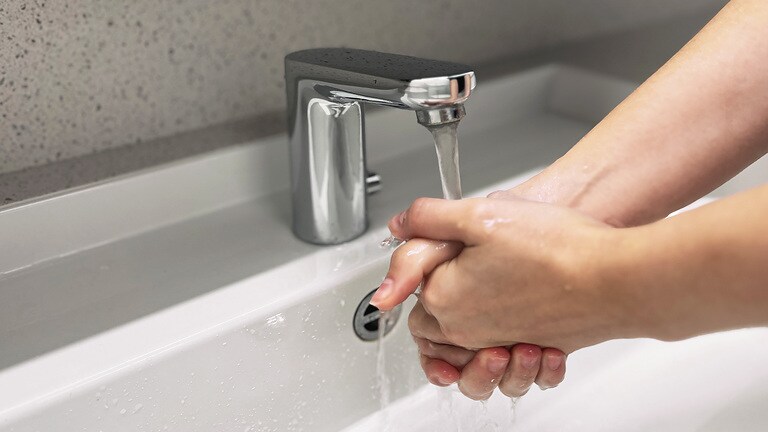
Water distribution and boosting
Comfort that suits every home
A reliable water supply is essential for comfort and everyday convenience in every home – from a morning shower to using several taps at the same time. In multi-residential buildings, a demand-based pressure-boosting system ensures that all residents always have sufficient water available at a constant pressure.
- Constant supply pressure for all residential units
- Demand-based adaptation to different usage situations
- Stable supply throughout the entire building

Heating, ventilation, and air conditioning (HVAC)
Reliable heat for a comfortable living environment
Heating and circulation pumps have a direct impact on room comfort and wellbeing in each apartment within an apartment block. A coordinated system design ensures that heat is distributed evenly and that all apartments are reliably supplied – regardless of their location or use.
- Even heat distribution in all residential units
- Performance adapted to actual usage requirements
- Reliable operation throughout the entire heating season

Wastewater collection and transport
Reliable drainage for living comfort and value retention
In residential properties, drainage and wastewater transport perform key functions: rainwater and surface water from outdoor areas and parking areas below the backflow level must be safely drained away. Equally important for a high level of living comfort is the reliable removal of wastewater from kitchens, showers and toilets.
- Reliable drainage of rainwater and surface water
- Lifting units with backflow protection to safeguard building areas below the backflow level
- Safe removal of wastewater from kitchens, bathrooms, and toilets
- Installation of lifting units with macerators to protect against clogging caused by improper disposal
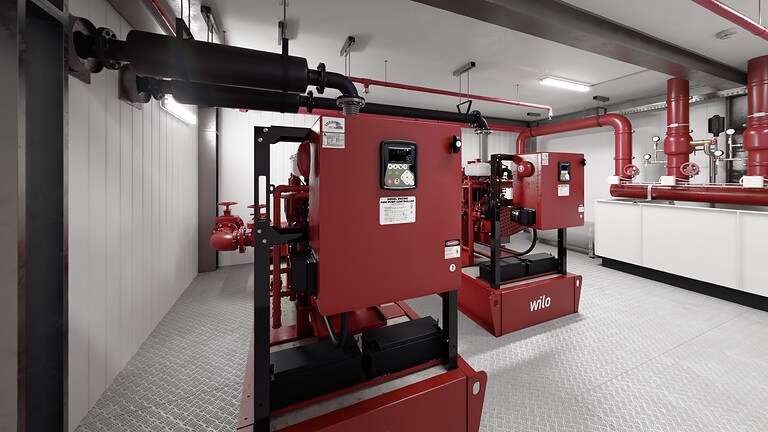
Firefighting
Safety that pays off in an emergency
Fire-fighting systems are an important part of comprehensive safety measures in a residential complex. They are invisible in everyday life, but play a crucial role in an emergency to protect residents, guests, and the building itself.
- Reliable supply of fire-fighting water in small multi-residential buildings and high-rise buildings
- High operational reliability thanks to redundant pump systems
- Systems for separating firefighting water and drinking water

Rainwater utilisation
Using resources wisely in the home environment
Rainwater falls where people live – directly onto the roofs of buildings. When collected and used wisely, it supports the responsible use of drinking water without compromising residents' comfort.
- Rainwater utilisation for toilet flushing
- Use for irrigation of outdoor areas and green spaces
- Reduction of drinking water requirements and associated costs during ongoing operation

Drinking water hygiene
Hygienic quality in every home
A clean and relable drinking water supply is a basic requirement for the health and well-being of residents in multi-dwelling buildings. Water quality is ensured in all apartments through a demand-based system design and safe domestic hot water circulation.
- Ensuring drinking water hygiene in all residential units
- Regular water exchange to prevent stagnation and legionella formation
- Reliable operation even with different usage profiles
Strong references. For living spaces with a future.
Our solutions are used in residential properties of varying sizes. Discover a selection of project references below and learn how we work together with our partners to ensure the safe and economical operation of residential buildings.

Residential building LIVING LEVELS, Berlin, Germany
In the LIVING LEVELS residential project directly next to the East Side Gallery, a contemporary supply concept was implemented that combines modern technology with a high level of living comfort and supports reliable supply in day-to-day operation. Across 14 floors and around 6,200 m² of living space, a sophisticated system supplies around 60 residential units – from single-person flats to penthouses – evenly with drinking water, heat and fire-fighting water.
With highly efficient circulation pump technology, demand-based pressure boosting and powerful fire-fighting systems, maximum supply security was achieved during ongoing operation. At the same time, the pump systems impress with low noise levels and excellent control performance – an example of how technology can increase living comfort and reduce operating costs in the long term.
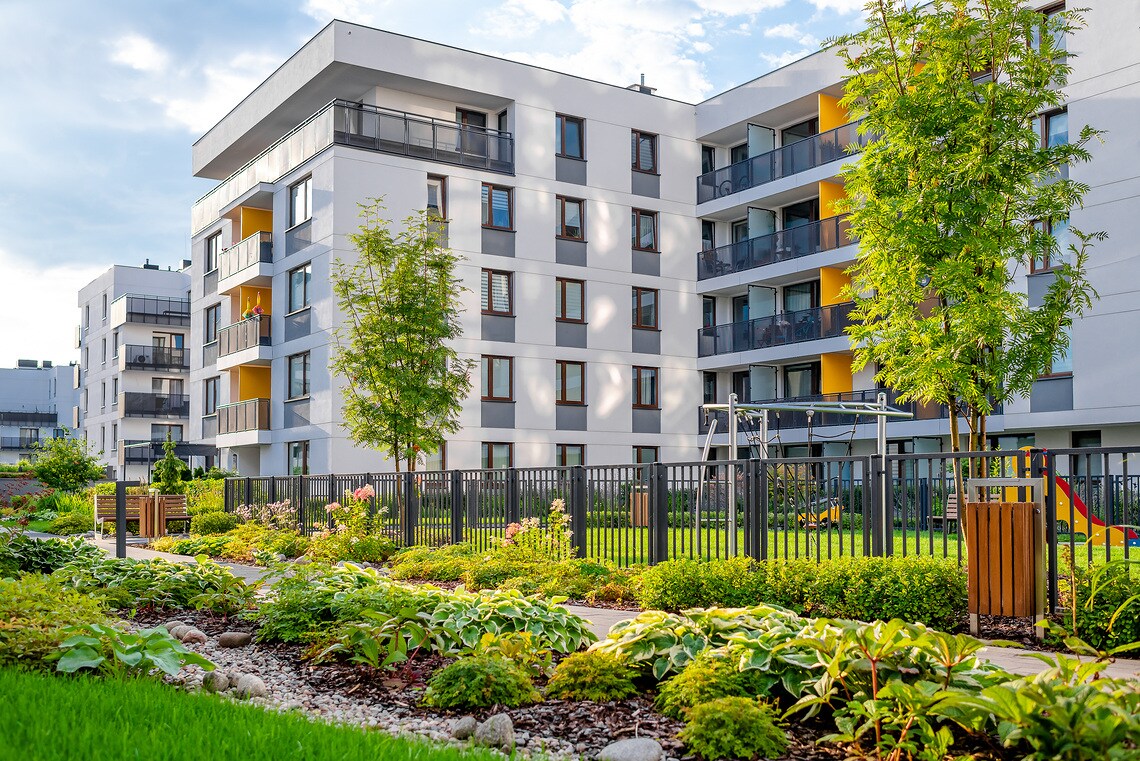
Moderna housing estate, Warsaw, Poland
In the Moderna housing estate, the focus was on the intelligent use of existing water resources. The aim was to make rainwater and meltwater reliably usable for irrigating the outdoor areas and for toilet flushing in the flats – all year round, hygienically safe and independent of rainfall levels.
A continuous supply was ensured with a demand-based rainwater utilisation system and redundant pump technology. The project shows how modern residential complexes can be operated in a resource-efficient manner while at the same time ensuring stable, comfortable building operation for residents.

Multi-residential building in Wasserburg am Inn, Germany
In a multi-residential complex with 35 residential units, there were repeated faults in the wastewater system. Cleaning cloths and hygiene products improperly disposed of via the toilets led to clogged pumps, increased maintenance requirements and restrictions in day-to-day living – a familiar risk in many residential properties.
The use of a solids separation system with integrated cutting technology made it possible to stabilise wastewater transport on a long-term basis. Fibrous and problematic solids are reliably shredded before they can cause clogging. The project shows how wastewater systems in residential buildings can be effectively protected against improper disposal and how operational reliability can be ensured even under real-life conditions.
Tailored services for the housing sector
Our service expertise supports the reliable operation of multi-residential buildings, residential complexes and residential neighbourhoods throughout their entire lifecycle. With a regional presence, in-depth system knowledge and coordinated service offerings, we support operational reliability, predictable processes and a technical infrastructure that functions reliably in everyday use.
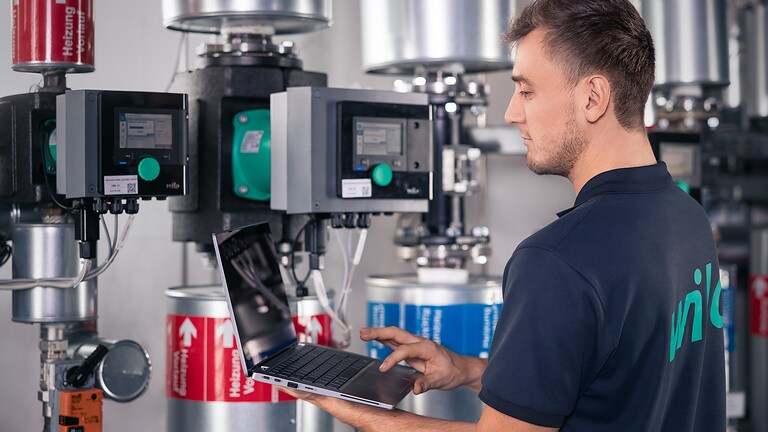
Wilo-Energy Audit
Identify untapped energy saving potential and develop customised solutions for sustainable efficiency.

Digital solutions
Intelligently control pumps, network systems end to end, and make operating data visible – for greater transparency and control in plant operation.
Technology that improves everyday life
Everyday life means having hot water in the morning, a heating system that works reliably in winter, trouble-free wastewater disposal and a dry basement after heavy rain – and we usually only notice these things when they are missing or they fail. For tenants, neighbours and visitors, reliable building services are not something to talk about, but a given that they can rely on. This stability creates trust, supports good neighbourly relations and helps people feel comfortable in their homes.
That is exactly what we work on. We deploy technology in such a way that it simplifies everyday life, creates safety and supports quality of life – quietly, reliably and durably.

FAQ | Frequently asked questions about solutions for multi-residential buildings
How can multi-residential buildings be optimised in terms of consumption even without a building management system?
Even without traditional building management systems, pumps and centralised systems can be operated reliably and according to demand. The crucial requirement is to ensure transparency about actual operations and to design systems that adapt to real usage profiles.
In this way, operational reliability and efficiency can also be improved in existing buildings in a targeted way, using simple sensor technology and without extensive structural work. The Wilo-Monitor provides a continuous overview of the technology in use and current energy flows.
What are the advantages of demand-based pump systems in existing residential buildings?
Pump systems dimensioned according to demand ensure that power is provided only where and when it is actually needed and in the required amount. This has a positive effect on energy consumption, operating costs and the service life of the equipment. At the same time, residents always enjoy a high level of comfort – regardless of the time of day or how the system is used.
Can existing infrastructure be easily retrofitted?
Why is it worthwhile to review existing pump systems?
In many multi-family buildings, pumps have been running with unchanged settings for years. A review often reveals that systems are technically outdated, oversized or not optimally controlled. Adjustments or targeted modernisation can uncover savings potential and make operation more stable and economical in the long term.
How quickly can improvements be implemented?
How do Wilo solutions support trouble-free residential operation?
Are measures in multi-residential buildings eligible for funding?
Measures relating to building services can be supported under national and European funding programmes, especially if they help to increase energy efficiency. Which measures are specifically eligible for funding depends on the project, the status of the building and the applicable national framework conditions. Early assessment provides planning certainty and can significantly facilitate investment decisions.